An early rise and a bird walk with Steven – saw a few birds but no BOPs. We jammed everything in our bags (no proper packing anymore), had another breakfast served graciously by Vanessa, and got on the bus with Steven, Paul (manager), and our ever-present security, and rode to the Tari airport for our flight to the Karawari Lodge.
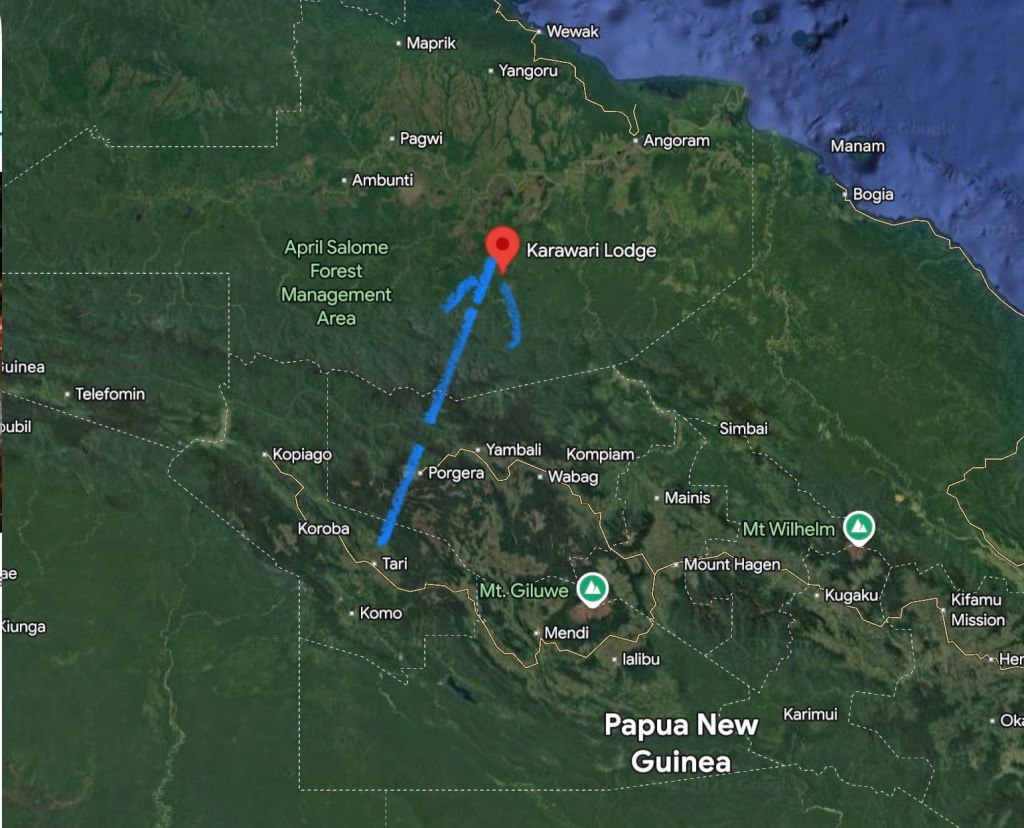
We skirted the terminal and went to the end of a runway where a guard opened a gate for us. After waiting a few minutes our hosts heard a plane and quite soon this little commuter came in, landed and taxied toward us.
It was a TNT (Trans New Guinea Tours) plane. Five passengers – the next guests at Ambua, got out and were greeted by Paul.
Our bags were then wheeled out to the plane…
were loaded, and we got in. Our young pilot, Sam, helped Dana strap in, climbed in to his seat off of the wing and through a cockpit window (ala Errol Flynn), did some checks, started and revved the engines, and taxied out onto the runway.
I mentioned to Sam that the plane reminded me of the Air America Pilus Porters that flew civvies like me around in Viet Nam (in addition to their CIA duties), and he said he knew about the Porters – nicknamed the “mystical Porters”, likely for their ability to land or take off in their own length. I was told that they had been developed for use in the Swiss Alps.
We gained speed and quickly lifted off. I went a little overboard with videos, as we rose from Tari and started into the mountains. The broken clouds made for interesting aerial scenes.
As we headed toward Karawari, we climbed over ridges, followed valleys, and swung around to open spots in the clouds. Most of what we flew over was PNG rainforest, but there were also wide grassy valleys,

rivers


and lakes
The flight lasted about an hour, but for me it didn’t seem that long. There were times when Sam let the ordinariness of what we were doing show.

We circled the Karawari landing strip once and then went in to land.
The lodge folks were not there as yet. We learned later that they had not known the time of our arrival because of the poor cell service at the lodge (more on that later). Didn’t know we were coming until they heard the plane. So we hung about with the huge unofficial reception committee, leading to the inevitable hokey-pokey
that was a big hit, mostly with the spectators.
That only happened after they had done what they had come for, standing in the draft of Sam’s plane as he started his take-off.
The older kids in the mob followed us to the boat that would take us to the lodge.
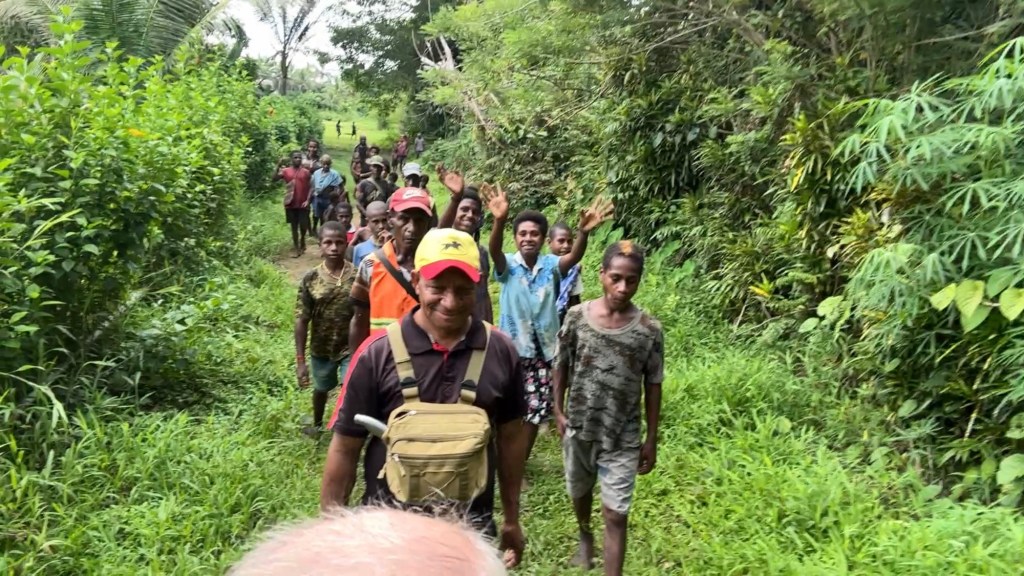
We passed several river scenes that would become familiar over the next few days
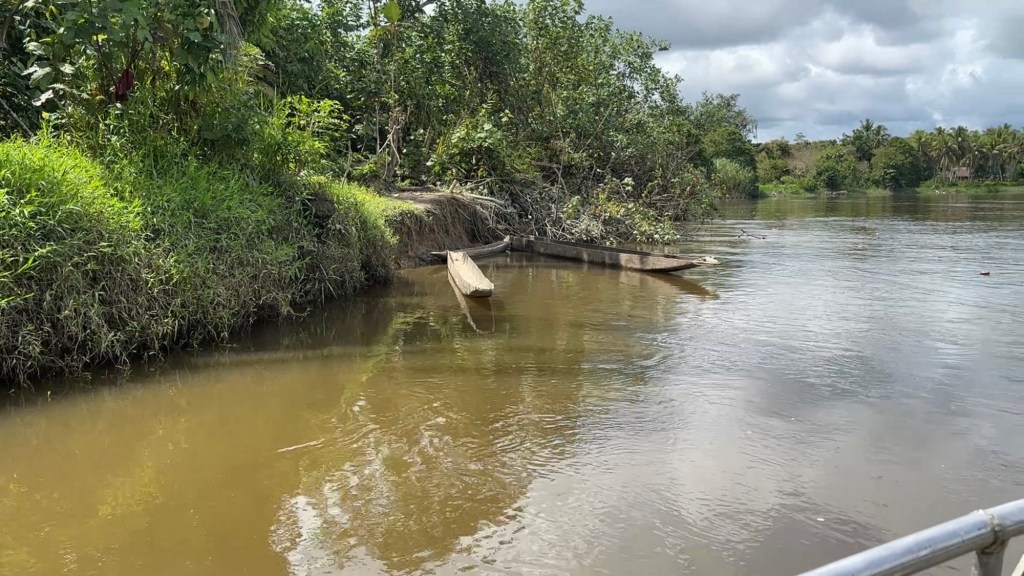
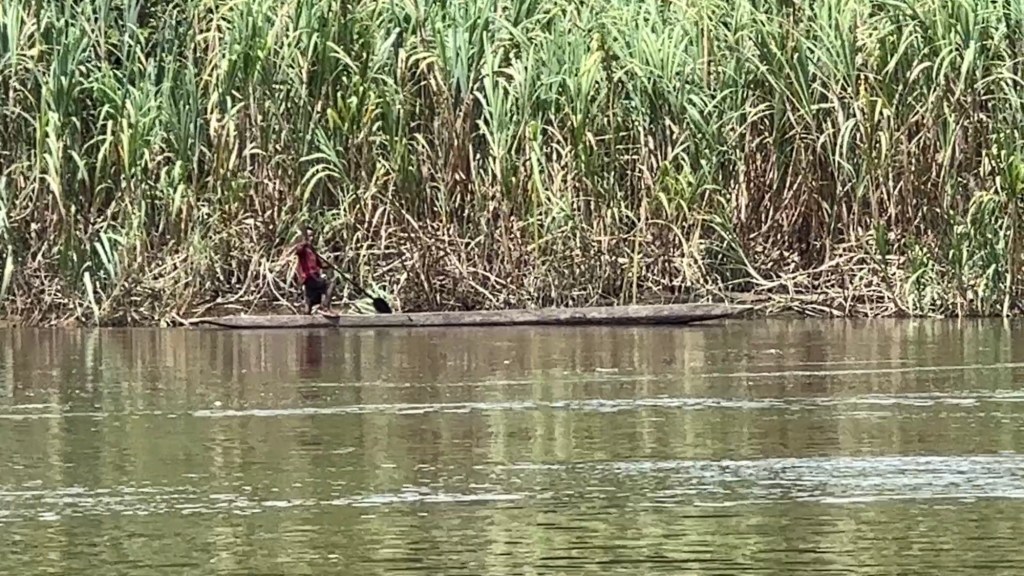

We knew we were arriving at the lodge when we saw the Sepik Spirit…

a floating hotel that we had originally been booked on but that was out of service due to too few guests. We disembarked and were escorted onto a platform to board an ancient, bush transport truck,…

for the short ride up a wet-season-ravaged road (its only route) that they are waiting for the dry season to repair.
We soon learned that we were the only guests. We were greeted at the lodge by Reuben, the head waiter, with a plate of cold towels adorned by fresh flowers – Reuben’s specialty, we have them at our set places for every meal, I saw him picking them later.
The lodge manager, Augus ( he lost the “t” at the end of his name somewhere over the years – his words), gave us a briefing while we shared a very tasty welcoming lemonade
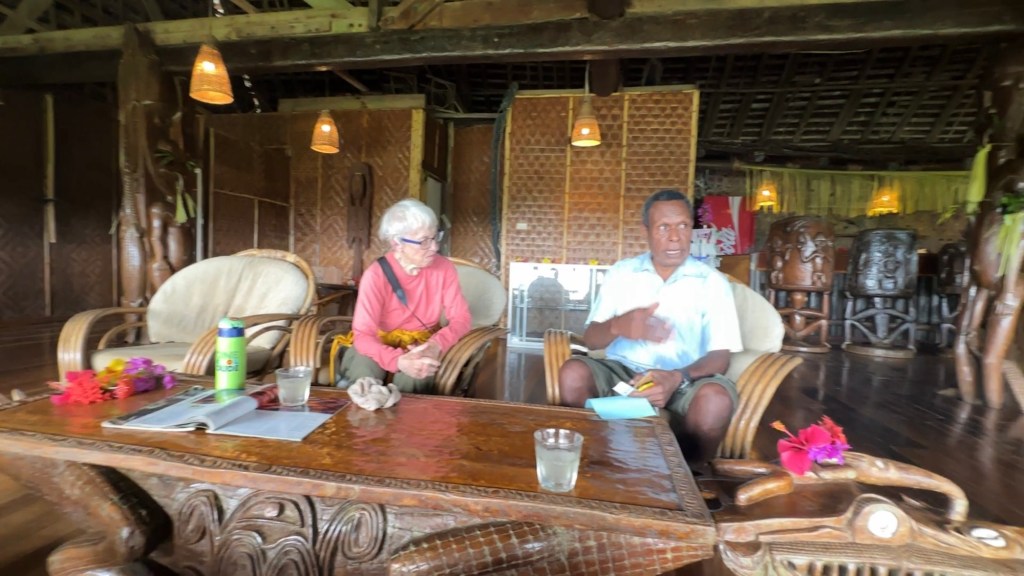
the lodge made quite an impression…

not least because it is essentially a gallery for the extraordinary art carving of the Karawari people.


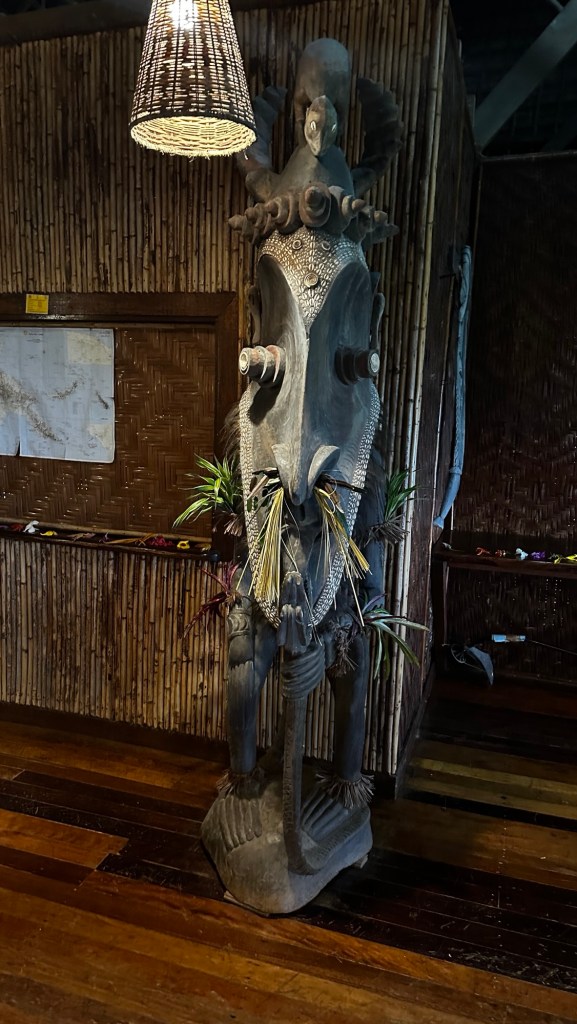
representing spirits in their complex, shape-shifting pantheon. Woefully simplistic and cross-culturally clueless to call it animistic or pagan.
The layout of the cottages and grounds seem to be photogenic no matter what angle they are viewed from.


We were shown to our cottage, which shares the lodge’s grand view of the Karawari River and Sepik Basin.

We had a quick lunch and then at 2pm started a river outing, with Chris and Brian,our boat captain for the next few days.

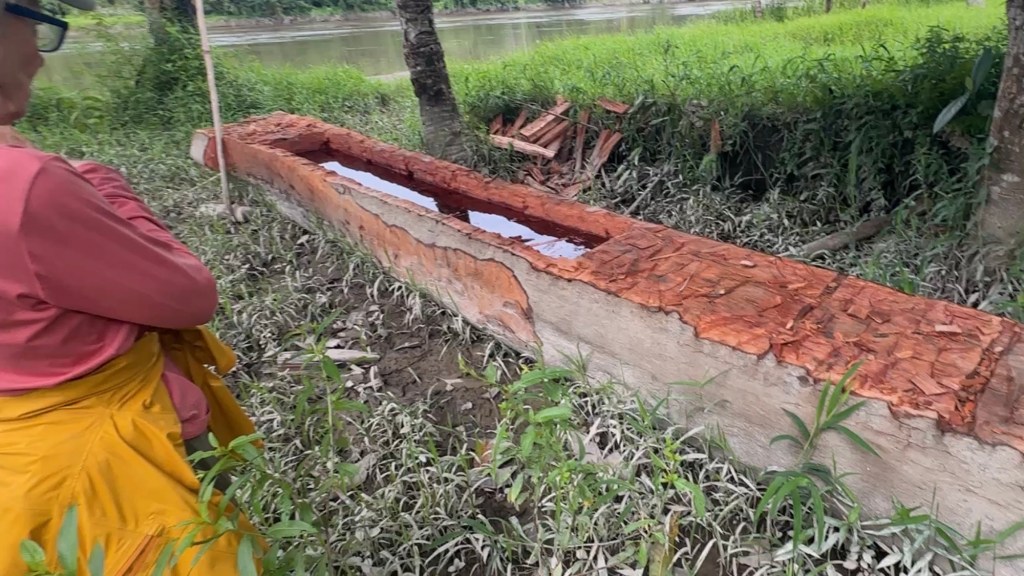
We went downstream and soon came to Chris’s village, Kundiman, where he showed us a large dugout transport boat under construction, with a flat transom for a motor.
We saw very few motorized canoes,and even fewer boats that were not dugouts. The canoe is black because they burn leaves on the surface as part of the finishing process. We walked about in the village, the footing tricky in spots…

seeing our first bloodstone…
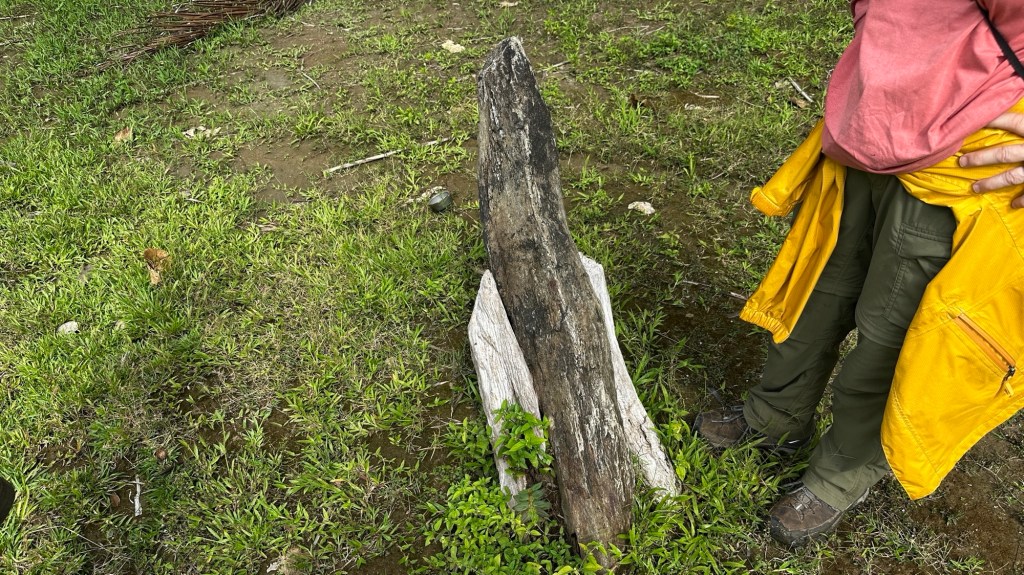
a vertical stone smeared with the blood of conquered enemies, and placed in a prominent spot. Some villages we saw have up to 3 of them.
There also were interesting juxtapositions, here the ever-present mini solar panels with some small fish traps.

This close-up shows the cane of the royal vine, with its spikes that stop fish from escaping once they get into the narrow end.
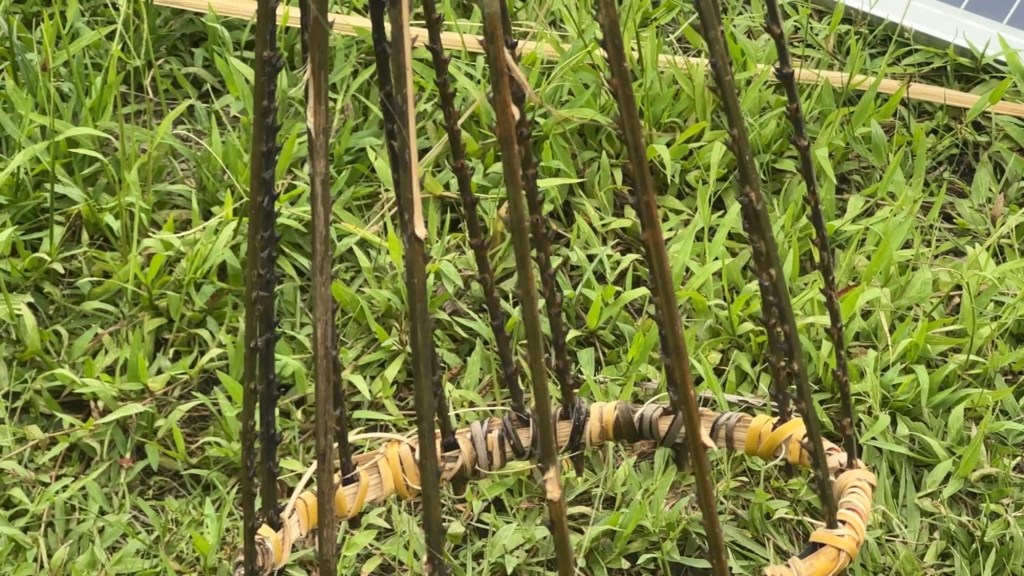
There was laundry drying…

together with cocoa beans – a new crop for the region – increasingly cultivated due to the skyrocketing price of cocoa.

Some guys were repairing a house…
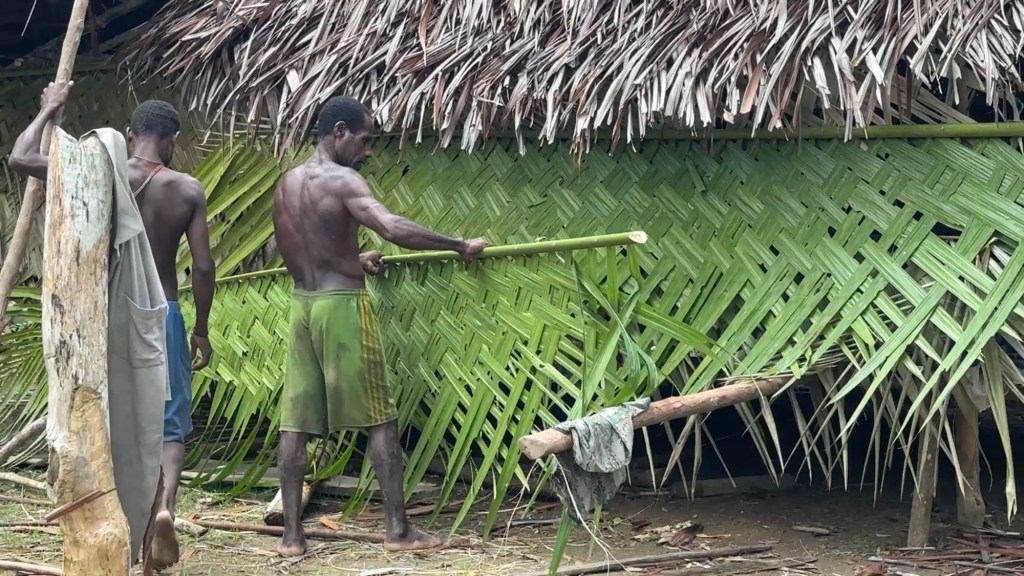
with a young kid straddling the top to place the heavy log pieces that hold the roofing sheets down in strong winds.

This is a pretty typical house, raised for flood protection, coolness, critter and bug protection, etc.
This is a canoe in the early stages of construction – the collected water is from a recent rain.
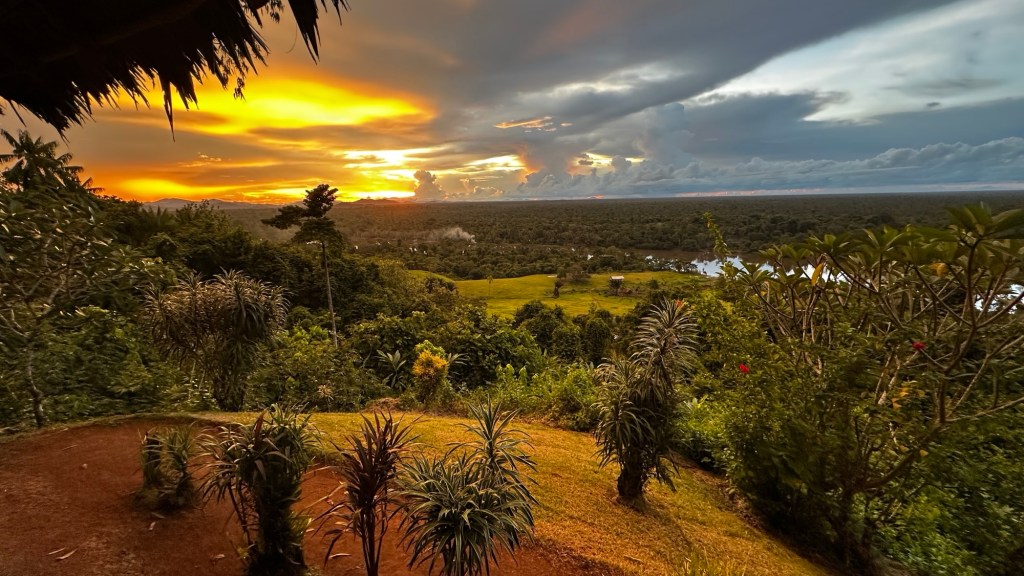
We’d had a full day, and so after dinner our main activity before turning in was to watch the phases of a spectacular and incredibly long-lasting sunset….
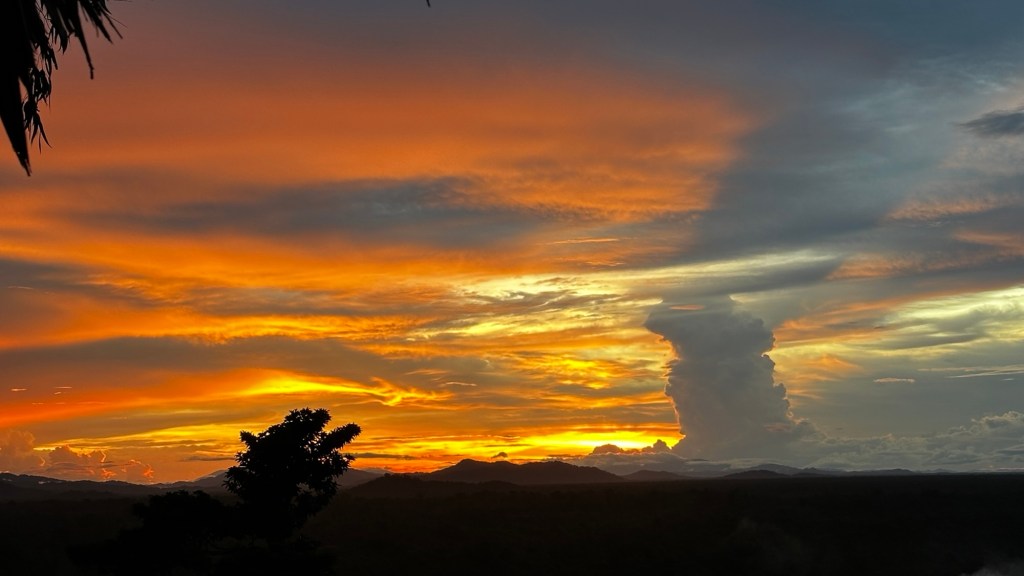

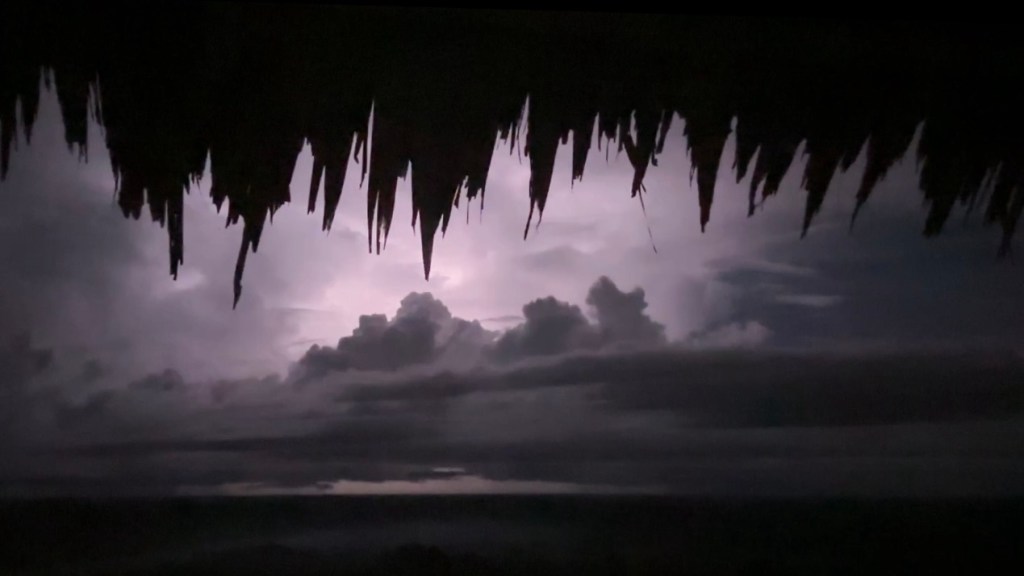
followed by an hour or more of dramatic lightning displays.
 Dana and Roger Travels